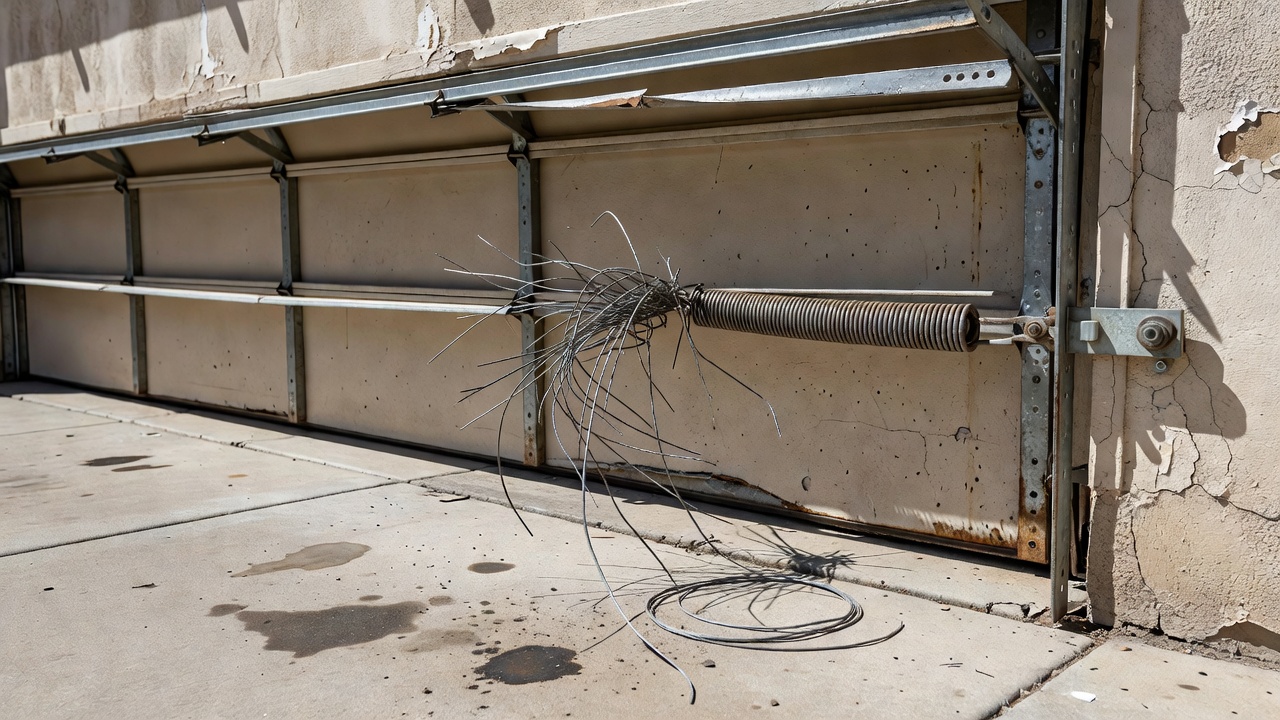
Garage Door Cable Replacement & Tension Adjustment in Los Angeles, CA
Garage Door Cable Replacement & Tension Adjustment repairs broken or frayed lift cables and restores correct cable tension and drum alignment to ensure safe operation and balance. This service addresses cable wear, uneven travel, and torsion or extension spring coupling failures for residential and light-commercial doors.
Immediate Action Recommended — Safety First
A fraying or broken cable is a serious hazard. Leaving a compromised cable can cause door collapse, property damage, or injury. Call immediately for stabilization; we can secure the door remotely or dispatch a same-day team to prevent escalation.
Timely cable replacement and tension calibration are critical because failed cables put the opener, track, springs, and occupants at risk. A snapped cable can cause sudden door collapse; mis-tensioned cables produce binding, off-track travel, and accelerated spring fatigue. We prioritize inspection of anchor points, drum grooves, cable diameter, and end-fit hardware to prevent cascading component failure.
Our technical process begins with a full kinetic balance test using digital force gauges and torsion scale meters to quantify spring preload and cable load. We inspect for wire strands broken beyond 3-5 strands, corrosion pitting, and improper swaging. Technicians carry galvanized aircraft-grade 1/8" and 3/32" cables, swage sleeves, high-temp nylon rollers, and cable cones to match manufacturer tolerances and safety factors.
Next we lock out the opener and de-energize any automatic reverse sensors, then manually counterbalance the door to set the neutral point. Using a calibrated torsion spring winding bar set and torque wrenches, we relieve spring tension and remove the damaged cable from the drum. We replace the cable with a pre-cut assembly or custom-length run, secure swage fittings with pneumatic crimpers, and ensure correct drum seating to prevent lateral slip.
Tension adjustment uses a combination of digital inclinometry and laser alignment to make sure cable length yields even drum wrap across the entire travel arc. We use spring torque calculations and pre-tension protocols per ANSI/DASMA safety guidelines to prevent overloading the opener and to maintain safe manual lift force. Final checks include cycle testing, limit switch calibration, and measuring closing force with a force gauge to verify compliance with safety thresholds.
Preventative tips for property owners include regular lubrication of rollers and cables with a dry PTFE spray, quarterly visual inspection for fraying or rust, and keeping the bottom seal free from obstructions that could change closing dynamics. Avoid DIY winding of torsion springs; improper tools or techniques can cause severe injury. Consider a maintenance contract that schedules annual cable and spring torque audits and replacement intervals based on door cycles.
Industry insight: modern counterbalance systems now use dual-torsion shafts, nylon-sheathed lift cables, and sealed-bearing drums to extend service intervals. We track component MTBF and offer data-driven replacement schedules using cycle counters and simple mechanical hours logs. Cost factors include spring wire size, cable grade, drum condition, and whether you need single- or double-cable assemblies; expect variable pricing depending on torsion complexity and parts required.
Our Los Angeles response approach blends immediate safety triage with efficient repair. Noble Garage Door and Gate Repair dispatches fully stocked vans with cable spools, swage kits, torsion bars, and a mobile testing rig to perform balance analytics on-site. We provide transparent estimates, photographed pre/post conditions, and a 90-day workmanship warranty on cable and tension services. For emergency failures, we offer same-day stabilization to secure the property before comprehensive repairs.
Common Issues We Fix
- Frayed or snapped lift cables
- Uneven door travel due to asymmetric cable tension
- Worn or grooved drums causing cable slip
- Excessive opener strain from mis-tensioned cables
- Corroded end fittings and swage failures