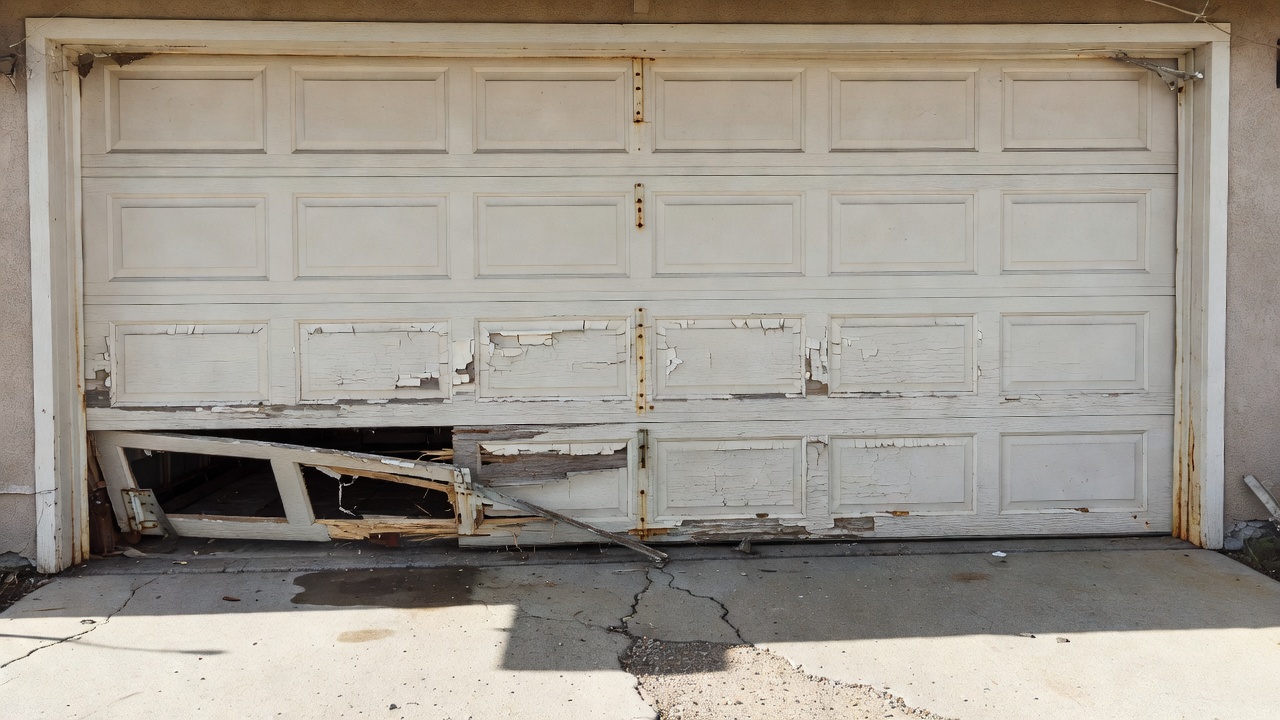
Emergency Garage Door Repair (24/7) in Los Angeles, CA
Emergency Garage Door Repair (24/7) delivers immediate mechanical and safety restoration for stuck, off-track, or hazardous garage doors to secure property and restore access within hours.
Immediate Action Required — Do Not Delay
A malfunctioning garage door can trap vehicles, allow unauthorized access, or cause catastrophic spring failure. Immediate intervention reduces injury risk, prevents costly structural damage, and preserves mechanical components. Call for emergency dispatch now and avoid improvised fixes that can increase liability.
A stuck or failing garage door creates an immediate safety and security risk and can expose mechanical systems to accelerated wear. Rapid diagnosis prevents motor burnout, torsion spring failure, and compromised locking hardware. Our crews triage with load testing, safety cable inspection, and opener control board diagnostics to prioritize repairs that restore safe operation.
Technically, we begin with an electrical and mechanical isolation: lockout power to the LiftMaster or Craftsman opener, place emergency stops, and support the door with professional jack stands and trolley clamps. We use digital multimeters to test motor currents, thermal imaging to spot overheating bearings, and dial indicators to check torsion tube runout. For cables and springs, we employ torsion spring winding bars, spring stretch gauges, and grade 8 fasteners to meet ANSI/DASMA tolerances.
Critical parts replacement is executed with OEM-grade or heavy-gauge aftermarket components: 0.273" winding cones for torsion systems, 7x19 galvanized aircraft cable assemblies, hardened 10mm roller shafts, nylon rollers or sealed ball bearings where specified, and belt-reinforced opener drive assemblies. For electronic faults we reload firmware on logic boards and calibrate photo-eye alignment with laser alignment tools for reliable safety reversal performance.
Preventative guidance we give property owners includes monthly visual checks of cable tension, quarterly lubrication of rollers and hinges with synthetic garage door grease, yearly torsion spring cycle tracking, and immediate reporting of grinding sounds or irregular travel. We recommend installing a battery backup opener and surge protection to reduce emergency calls from power events common in LA neighborhoods during storms or grid switching.
Industry insight: newer sectional doors with insulated polystyrene cores require delicate balancing to prevent thermal-induced track warping. We reference acoustic-rated seals, EPDM threshold strips, and curtain friction coefficients when specifying replacements. Climate factors in Los Angeles—heat expansion, coastal salt corrosion, and seismic micro-movements—drive different material choices compared with inland builds.
Our local response approach emphasizes a routed rapid-dispatch model. A Los Angeles technician is routed based on live GPS, with parts-backed vehicles carrying torsion springs in common sizes, both left- and right-wind, and on-board cylinder jacks for safe door support. Response timelines are communicated via SMS ETA and include on-site diagnostic photos and a clear repair estimate before work begins.
Common emergency scenarios and on-site tactics: for a door off-track we first stabilise the panel, remove lower stop bolts, realign track with pry bars and hydraulic door clamps, then permanently secure with backer plates. For snapped torsion springs we neutralize stored energy using spring containment boxes and follow OSHA-compliant lockout/tagout. Every repair ends with dynamic load testing and cycle verification to ANSI 1260 reversal standards.
We also coordinate with insurers and property managers in Los Angeles for direct billing where permitted and provide a written scope-of-work and 90-day labor warranty. Emergency calls are logged with timestamped media for claim substantiation and future maintenance scheduling to reduce repeat failures.
Common Issues We Fix
- Snapped torsion spring
- Opener motor burnout or failed control board
- Door off-track or bent track
- Broken lift cables
- Photo-eye misalignment or sensor failure
 Noble Garage Door and Gate