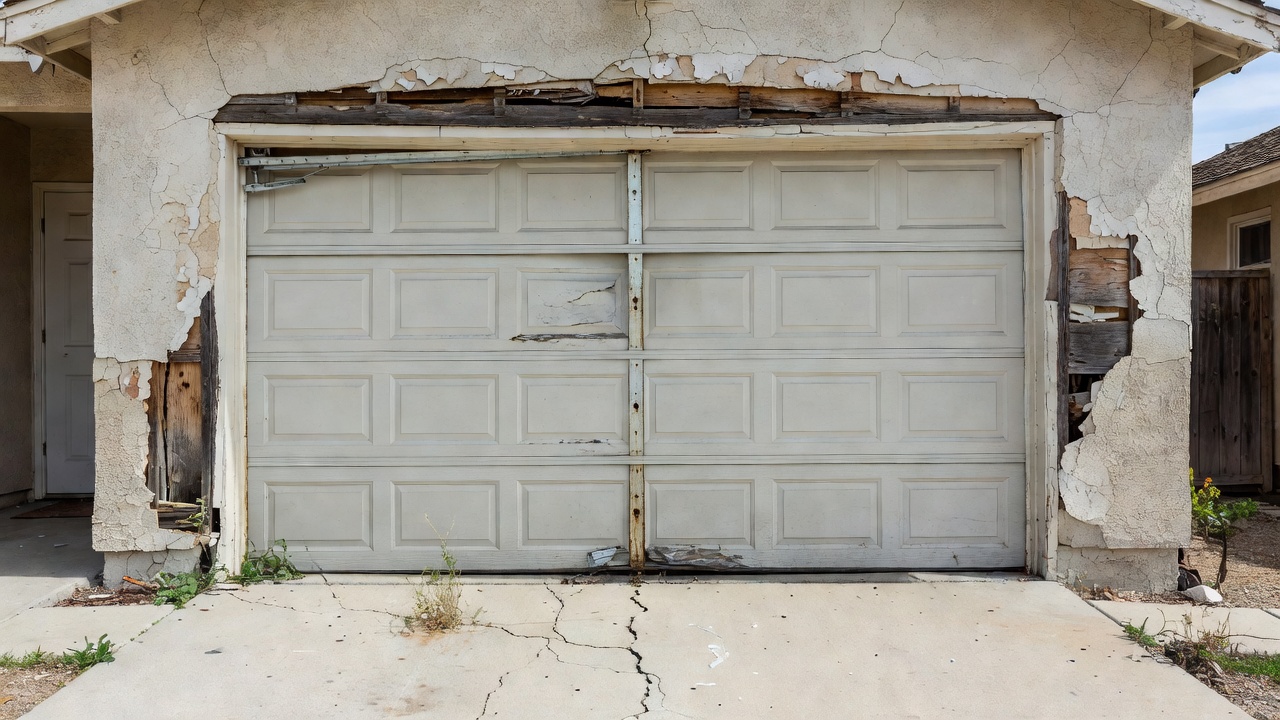
Garage Door Installation & Replacement in Los Angeles, CA
Garage Door Installation & Replacement means removing an old door and installing a new, code-compliant system including springs, tracks, opener integration, and safety devices. This service restores operation, enhances security, and meets local building code requirements.
Act Fast — Springs and Tracks Are High-Risk Components
Torsion springs store lethal energy; delayed replacement can cause property damage or injury. Misaligned tracks accelerate wear and can collapse under load. Immediate assessment prevents unsafe failures and higher repair costs.
Installing a garage door is critical because it is a primary barrier for property security, weather protection, and energy performance. Faulty springs or misaligned tracks create immediate safety hazards; torsion spring energy and opener force must be calculated and balanced to meet ANSI/UL standards. We perform torque calculations, spring selection, and structural header checks before any lift system is attached.
The technical process begins with an engineering-grade assessment. We document header load capacity, jamb plumbness, and track geometry with laser levels and digital inclinometers. We specify materials — such as 2-inch insulated steel panels, polystyrene cores, or solid-wood stiles — and match them to R-values and thermal performance targets for Los Angeles microclimates.
During replacement we use specialty tools and procedures: hydraulic lift jacks for panel staging, torsion spring winding bars sized to ANSI tolerances, calibrated tension gauges for cable torque, and garage-door-specific cordless impact drivers. Openers are integrated using wrench torque specs, travel limit programming, and photo-eye alignment. We test Safety Reversal per UL 325 and document cycle counts for warranty records.
Preventative tips for owners include annual safety inspections, lubrication with PTFE spray on nylon rollers, cable stretch monitoring every 5,000 cycles, and garage ventilation checks to prevent excessive heat buildup. We recommend surge-protected GFCI receptacles for openers and battery backup modules for coastal outage resilience. Simple homeowner checks — visual cable condition, smooth door travel, and responsive auto-reverse — reduce emergency replacements.
Industry dynamics are shifting: insulated sectional doors and high-cycle torsion springs are replacing single-layer doors to meet energy codes and longevity demands. Smart opener integration with Wi‑Fi, rolling-code security, and encoder-based position feedback are now standard options. We keep technicians trained on new ANSI standards and local Los Angeles permitting for structural header modifications.
Our local response approach focuses on rapid assessment and transparent cost factors. We itemize material, labor, permit, and disposal fees. Typical cost drivers include door material (steel vs wood), insulation level, hardware upgrade (ball-bearing rollers, galvanized tracks), and opener class. We provide on-site measurements with digital calipers and a parts-detailed estimate so there are no surprises.
Safety compliance and post-install follow-up are integral: every install includes digital photos of spring winding positions, a signed safety checklist, and programming receipts for opener limits. We offer optional preventative maintenance plans with cycle-count tracking and off-peak scheduling. For Los Angeles properties near the coast, we recommend stainless steel hardware and marine-grade fasteners to resist corrosion.
Common Issues We Fix
- Broken or worn torsion springs
- Damaged panels or dented sections
- Misaligned or bent tracks
- Failed or incompatible opener units
- Rotten or compromised header framing
 Noble Garage Door and Gate