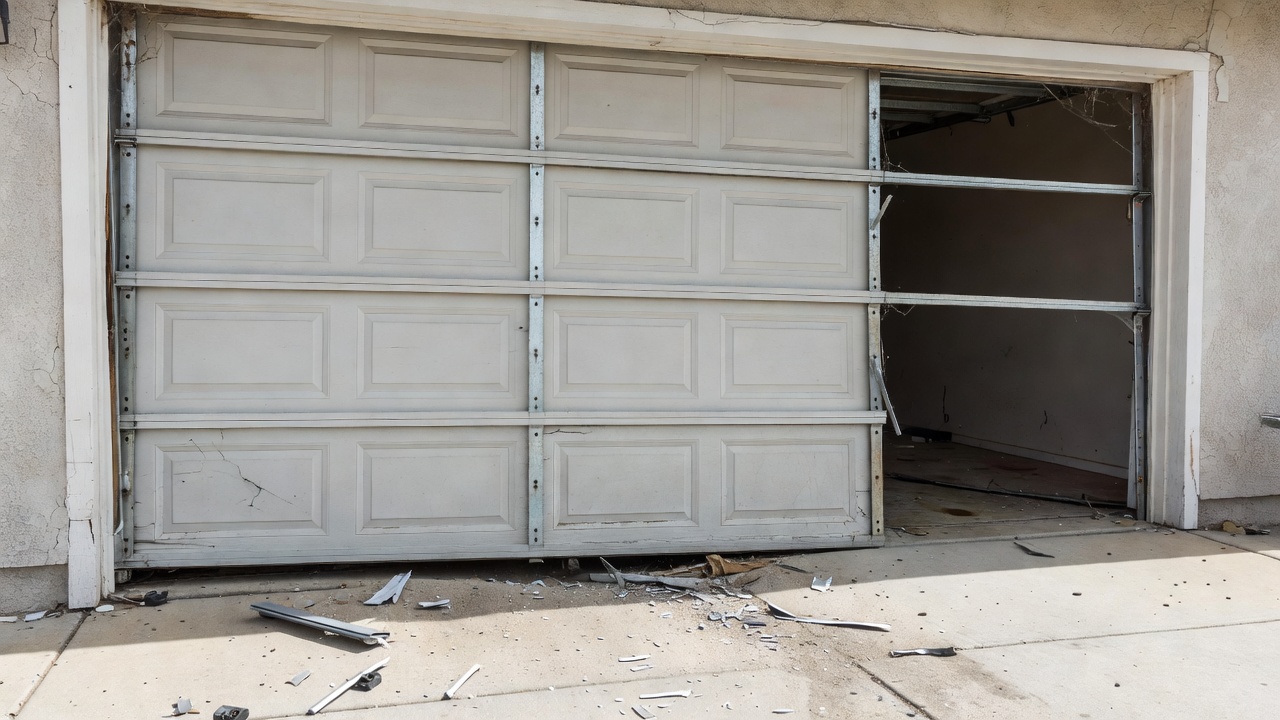
Garage Door Off-Track Repair in Los Angeles, CA
A garage door off-track repair corrects misaligned or derailed sectional doors, restoring safe operation and preventing structural damage. This service re-seats tracks, inspects rollers and cables, and tests opener synchronization to return controlled movement.
Act Fast — Off-Track Doors are Dangerous
An off-track garage door can fail without warning, causing injury, vehicle damage, or loss of property access. Immediate stabilization reduces risk to people and prevents secondary damage to springs, cables, and the door header. Schedule an urgent assessment to secure the opening and get a reliable repair plan.
Off-track doors create immediate safety and security risks. When a bottom roller jumps the rail or a bent track impedes travel, the door can jam mid-cycle or collapse. Quick intervention prevents torsion spring overload, cable fraying, and damage to the garage header and jambs, reducing the need for full door replacement.
Our technical workflow begins with a precision assessment using digital calipers, a laser alignment tool, and tension gauges to measure spring torque and cable tension. Technicians inspect nylon and steel rollers, track crowns, and roller shaft play. We document misalignment vectors and prepare a corrective plan that may include track re-bending, roller replacement, or bracket reinforcement.
Repair steps often require specialized equipment: track straightening pliers, hydraulic track jacks, and a floor-mounted alignment jig. For torsion spring systems we use spring winding bars, calibrated torque wrenches, and safety blocking to relieve stored energy safely. We follow ANSI/DASMA safety recommendations and local Los Angeles building codes for anchoring and clearances.
Component replacement is guided by real-world diagnostics. We specify sealed bearing rollers for high-cycle doors, galvanized steel tracks for coastal corrosion resistance, and aircraft-grade cables for heavy insulated panels. Opener integration involves limit switch calibration and clutch/gearbox inspection so the operator syncs with the repaired track geometry.
Preventative measures reduce reoccurrence: routine lubrication with silicone or lithium grease, quarterly roller and cable checks, and an annual safety test that includes balance testing, reverse-force calibration, and photo-eye alignment. We also recommend isolated vibration pads where concrete slab settlement causes track misalignment.
Industry trends show increasing use of reinforced roll-formed tracks and nylon-encased rollers for quieter, longer-life operation. Technicians now use smartphone-enabled dial indicators and digital torque logging to produce maintenance reports homeowners can submit to insurers. We track failure modes by ZIP code to advise on material selections resisting localized corrosion or seismic movement.
Our local response approach prioritizes same-day triage in Los Angeles. On arrival, crews secure the opening with temporary brackets if necessary, photograph damage for your records, and provide a clear estimate. We carry common OEM rollers, cables, brackets, and a spare torsion spring set to minimize downtime and complete many repairs in one visit.
Post-repair verification includes operational cycles under load, PSSE (post-service safety evaluation), and a documented checklist showing torque readings, limit switch settings, and final clearances. We offer optional quarterly maintenance plans and a 90-day workmanship warranty tailored to parts used and job complexity.
Common homeowner questions—about noise, safety sensors, or opener compatibility—are answered with direct diagnostics and costed options. We explain tradeoffs between repair and replacement, showing expected life-span extensions when steel track is reworked versus replaced. Our goal is a technically sound, code-compliant repair that maximizes door longevity and safety.
Common Issues We Fix
- Bent or warped track rails
- Worn nylon or steel rollers
- Frayed or broken lift cables
- Torsion spring imbalance or damage
- Opener mis-synchronization or limit switch failure
 Noble Garage Door and Gate