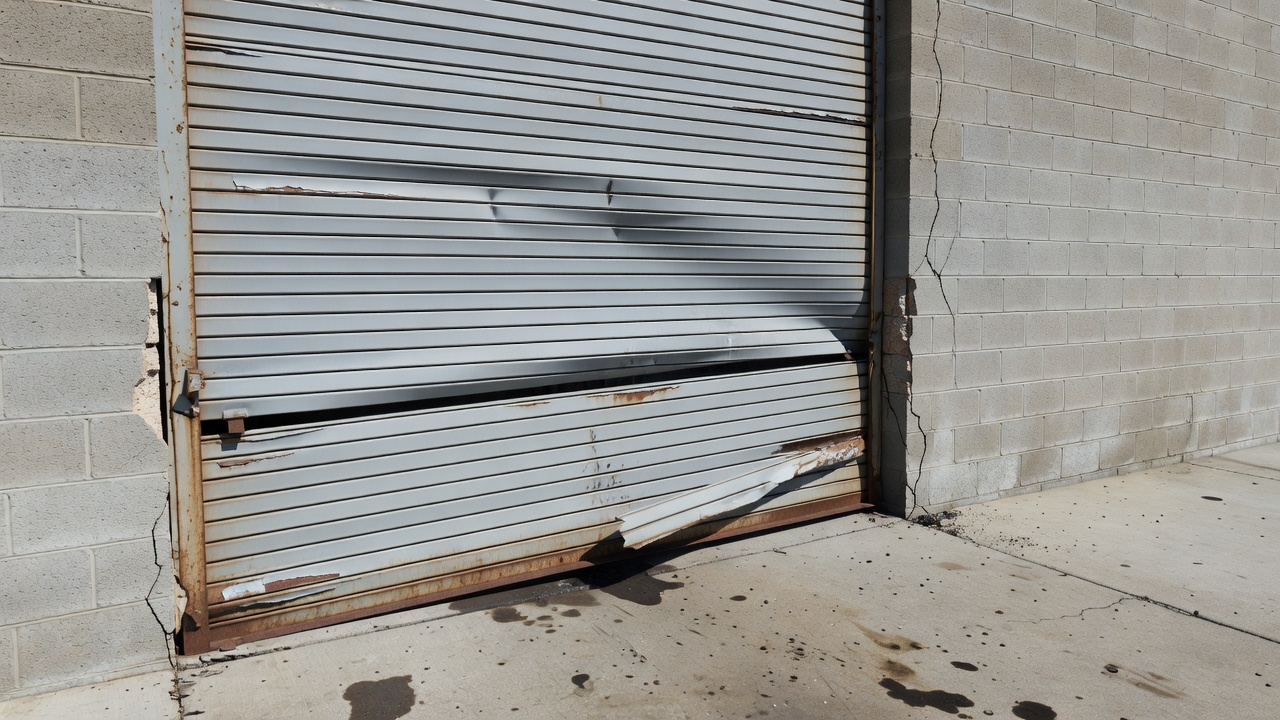
Rolling Steel Door Repair in Los Angeles, CA
Rolling Steel Door Repair fixes malfunctioning or damaged commercial roll-up doors, restoring security, weather-seal, and operational safety within industrial and retail properties. Our certified technicians assess springs, drums, slats, and drive motors to return doors to spec quickly.
Immediate Action Required for Door Failures
A failed rolling door exposes your facility to theft, safety hazards, and operational delays. Prompt repairs stop progressive damage to springs, drums, and motors. Delaying service increases costs and the risk of full curtain replacement, so prioritize emergency triage to limit downtime.
A rolling steel door is critical infrastructure for storefronts, warehouses, and loading bays because a compromised curtain or torsion assembly creates security and OSHA hazards. Corrosion, impact dents, and broken lift cables accelerate failure. Rapid repair prevents unauthorized entry, pest ingress, and costly downtime for warehouse logistics.
Technically, repair begins with a calibrated structural inspection using micrometer thickness gauges, borescope imaging for drum shafts, and load-testing with calibrated tension meters. We document torsion spring preload, check cable diameter against ANSI specifications, and inspect endlocks, guides, and bottom bars. Tools commonly used include torque wrenches, magnetic particle crack detectors, and hydraulic door jacks for safe curtain handling.
Common mechanical failures involve ballot-seam separation, guide misalignment, and worn bearing carriers. Electrical faults include burned commutators in geared motors, intermittent photocell failures, and control board faults due to transient surges. We use multimeters, thermal imaging to detect motor hot spots, and surge-protected test rigs to isolate control issues.
Replacement parts rely on measuring slat profiles and matching steel gauge and galvanization. For heavy-duty doors we specify 11-gauge or 14-gauge steel slats, galvanized or Galvalume finishes, and replace drums with keyed shafts and duplex-bearing assemblies. Spring selection follows ANSI/ASTM torque tables and considers cycle life; we routinely offer oil-tempered torsion springs rated for 25k to 100k cycles.
Preventative measures reduce repeat service calls: scheduled lubrication with synthetic grease, periodic cable re-tensioning, guide track plumb alignment, and installing heavy-duty bottom seals for weather resilience. We also recommend retrofit options such as variable-frequency drive (VFD) motor controllers for soft-start/stop to reduce dynamic loads and extend component life.
For property owners concerned about compliance, our technicians reference OSHA mechanical power-transmission guards and local LA building codes when installing safety photoeyes, edge sensors, and manual chain hoists. Emergency repairs follow a lockout-tagout procedure with arc-flash awareness and siting of barricades for active loading docks.
Industry insights: supply-chain delays can impact custom slat lead times in Los Angeles, so we maintain a rotating inventory of common gauges and colors. Climate factors — marine air and coastal humidity — accelerate corrosion in LA neighborhoods; we often recommend stainless fasteners and marine-grade coatings for seaside facilities. Our local dispatch model uses geofencing for rapid arrival and parts staging to minimize truck rolls.
Our response approach prioritizes triage assessment within one hour of contact. Dispatch teams carry diagnostic kits, spring charts, spare guide inserts, and control board modules to complete most repairs same day. We provide clear cost factors: labor (flat-rate per hour), parts (OEM vs. aftermarket), emergency dispatch premium, and potential rigging or crane requirements for large assemblies.
Common Issues We Fix
- Broken torsion springs
- Frayed or snapped lift cables
- Dent or curtain deformation causing binding
- Worn drums or shaft misalignment
- Motor failure or control board faults