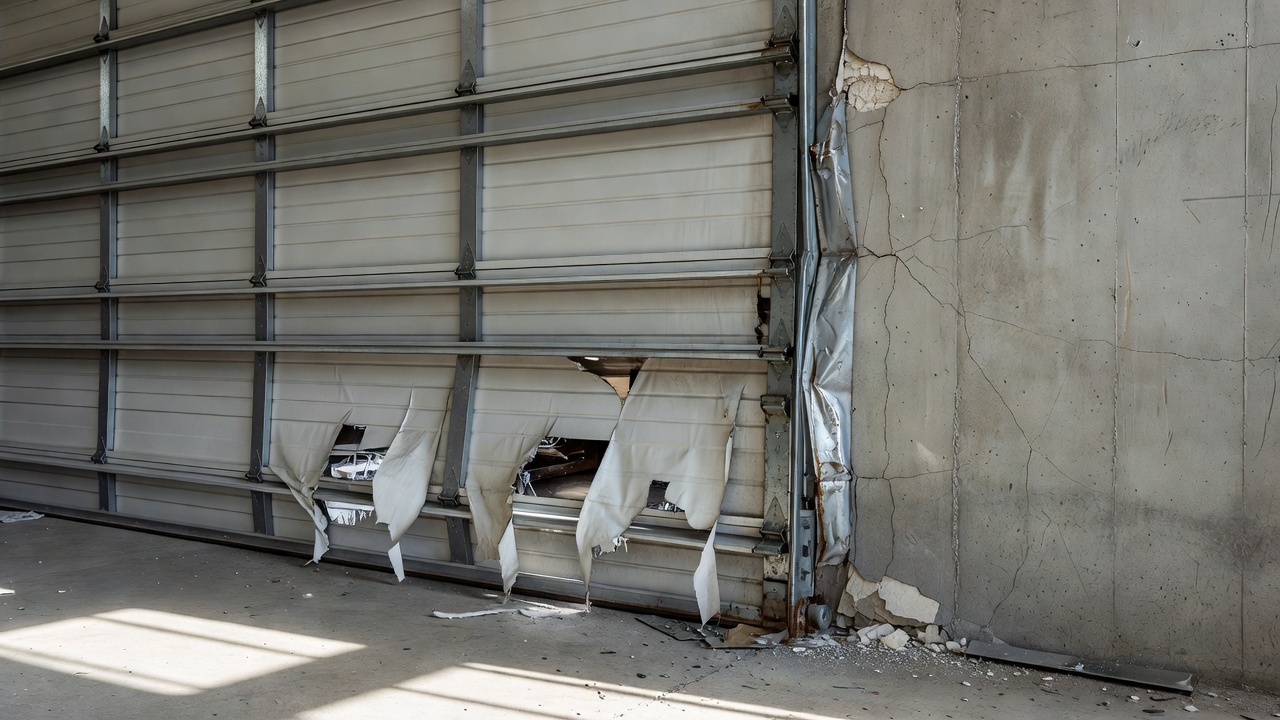
High-Speed Door Repair & Track Service in Los Angeles, CA
High-speed door repair and track service restores safe, rapid-cycle operation for commercial and industrial doors, preventing downtime and safety liabilities.
Immediate Action Required for Faulty High-Speed Doors
High-speed door failures escalate quickly: safety hazards, lost throughput, and compromised cold-chain integrity. Isolate the area, stop use, and call for certified repair to prevent inventory loss and regulatory non-compliance. Rapid intervention reduces repair costs and avoids emergency replacements.
High-speed doors run at higher RPMs, use specialized components like frequency inverters, centrifugal clutches, and reinforced torsion systems. Failure modes include bent guide rails, worn V-belts, encoder drift, and PLC communication errors. Our technicians use calibrated laser alignment, thermal imaging, and vibration analysis to diagnose root causes rather than replace whole assemblies unnecessarily.
Why this service matters: a malfunctioning high-speed door halts production flow, disrupts cold-chain environments, and creates OSHA non-compliance risks. Rapid closing and opening expose pneumatic lines, energy loss in refrigeration zones, and safety sensor failures that can cause entrapment. Timely track realignment and drive tuning reduce energy costs and protect inventory integrity.
Technical process overview: we begin with a mechanical and control systems audit, inspecting motors, gearboxes, control panels, brake assemblies, and photobeam arrays. We test encoder feedback with an oscilloscope, verify PLC logic via ladder diagnostics, and assess torque curves using a portable dynamometer. Track straightening uses hydraulic rail press fixtures and laser-guided straight edge systems for sub-millimeter tolerances.
Specialized tools and equipment: our crews deploy infrared thermal cameras for bearing hotspot detection, borescope inspection for internal drum assessment, and industrial ultrasonic weld testers for seam integrity on fabric high-speed doors. For sealed environments we utilize hygrometers and LGR dehumidifiers to manage humidity intrusion after repairs to maintain cold-room PSYCHROMETRIC balance.
Preventative maintenance and owner tips: schedule quarterly cycle-count inspections, check encoder alignment after heavy-impact events, and document torque settings for all spring assemblies. Replace V-belts and bearings on a timed basis to avoid catastrophic failure. Keep sensor fields clear of debris and test safety edges monthly to maintain ANSI/DASMA compliance.
Industry insights and cost factors: replacement of a bent guide rail costs less than full curtain replacement but depends on rail material (aluminum vs. galvanized steel), curtain type, and drive complexity (servo vs. VFD). Typical repair ranges for Los Angeles facilities vary from $450 for sensor and track tweaks to $6,500+ for servo-drive replacement and curtain rebuilds. Lead time for OEM parts like PLC modules and encoders affects emergency scheduling.
Our local response approach: Noble Garage Door and Gate Repair dispatches certified technicians with factory training and stocked vans. We maintain local relationships with major manufacturers for rapid parts procurement and offer after-action reports and torque charts post-service. Emergency dispatch is available; call (702) 757-3746 for immediate assessment.
Compliance and safety: every repair includes a safety system validation against OSHA and ANSI standards, documented lockout/tagout during service, and electronic verification of safety circuit redundancies. We provide written maintenance plans and optional service-level agreements to reduce repeat failures and maximize uptime.
Common Issues We Fix
- Bent or misaligned guide rails causing curtain binding
- Worn bearings and rollers producing vibration and noise
- Encoder drift or PLC communication faults leading to erratic cycles
- Damaged or torn curtain material compromising thermal seal
- Drive motor failures or clutch slippage reducing speed consistency